APPLICATIONS

CRISPR Editing in Primary Cells

Inspiring New Therapies in Biomedicine

The cell is the building block of an organism; the genetic and protein profiles of cells reveal vital information about the health of that organism. Researchers, therefore, use cell-based assays and disease models for understanding diseases and developing therapeutics. While immortalized cell lines have been commonly used in these studies for decades, primary cells are becoming the preferred choice in experiments - especially for preclinical studies.

Here, we will take a closer look on how primary cells are different from immortalized cell lines, how they are used for building disease models, and how CRISPR gene editing of primary cells is furthering biomedical research.

Primary Cells Versus Immortalized Cell Lines

Immortalized cell lines, obtained from cell culture banks, have been commonly used in cell culture studies for decades. Normal cells in the body can only divide for a finite number of times i.e. they have limited life span in cell culture experiments. Immortalized cell lines have acquired the non-physiological ability to proliferate indefinitely due to accumulated or induced genetic mutations. However, continuous passage of immortalized cell lines over time may affect their original physiological properties, resulting in misleading results in studies.

Therefore, researchers prefer using alternatives that better resemble the natural state of the organism for their experiments. Primary cells are freshly isolated cells from tissues of the host species using enzymatic or mechanical mechanisms. Primary cells, unlike immortalized cells, maintain their biological identity and can only propagate for few generations in vitro.

The main advantage of primary cells over immortalized cell lines is that they bring us one step closer to a model organism, but are relatively easy to manipulate and assay compared to the organism itself, making them the gold standard for studying human diseases.

Primary Cell Applications Are Furthering Biomedical Research

Primary cells are ubiquitous across biomedical research and have been used in cancer research, virology, drug screening, toxicity testing, vaccine production, genetic engineering, tissue and organ replacement, prenatal diagnosis, cell therapy, and other applications.

Primary Cell-Based Disease Models

The most obvious way to understand changes in a diseased state is to isolate cells from a patient suffering from that disease and compare their properties to those from a healthy person. The isolated cells can be characterized for their genetic constitution (mutations in certain genes), protein profiles, or even biomechanical properties. Any deviations from normal cell state help identify the causal elements involved in that particular disease. The same setup can also be used for screening the effect of certain drugs on diseased cells, while monitoring side effects on normal cells.

In cancer research, for instance, primary cell culture from patient biopsy has afforded us with personalized systems with which to study disease and therapeutic options [1]. Excised tissue is minced and digested with enzymes to break down the extracellular matrix, leaving the cells to be cultured and tested for deleterious mutations, sensitivity to different therapeutic applications, and cancerous properties.

Fibroblasts are one of the most commonly studied adult human primary cells. They are durable in culture, and have therefore been the go-to cell type for the foundational studies of genetic manipulation in cell culture. The best example of their utility has been in generating induced pluripotent stem cells (iPSCs) that can differentiate into any cell in vitro. In a separate discussion, we also elaborated on the iPSCs generation and stem cell applications. Lastly, for our primary cell-based disease modeling discussion, researchers have used human skin fibroblast as a model for understanding Parkinson’s disease [2].

3D Organoid Primary Cultures

3D organoid cultures have opened doors for studying cancerous tissues in an environment that closely resembles their natural state. Because the cells of organoids propagate in a three dimensional environment, their characteristics often more closely resemble their natural state. Researchers hope that organoid cultures could be established from healthy and tumor cells that are isolated from individuals. These cells could serve as databanks for genetic and protein profiling, ultimately simplifying drug screening for different cancer types.

Primary T Cells Aid Immunotherapies

Image

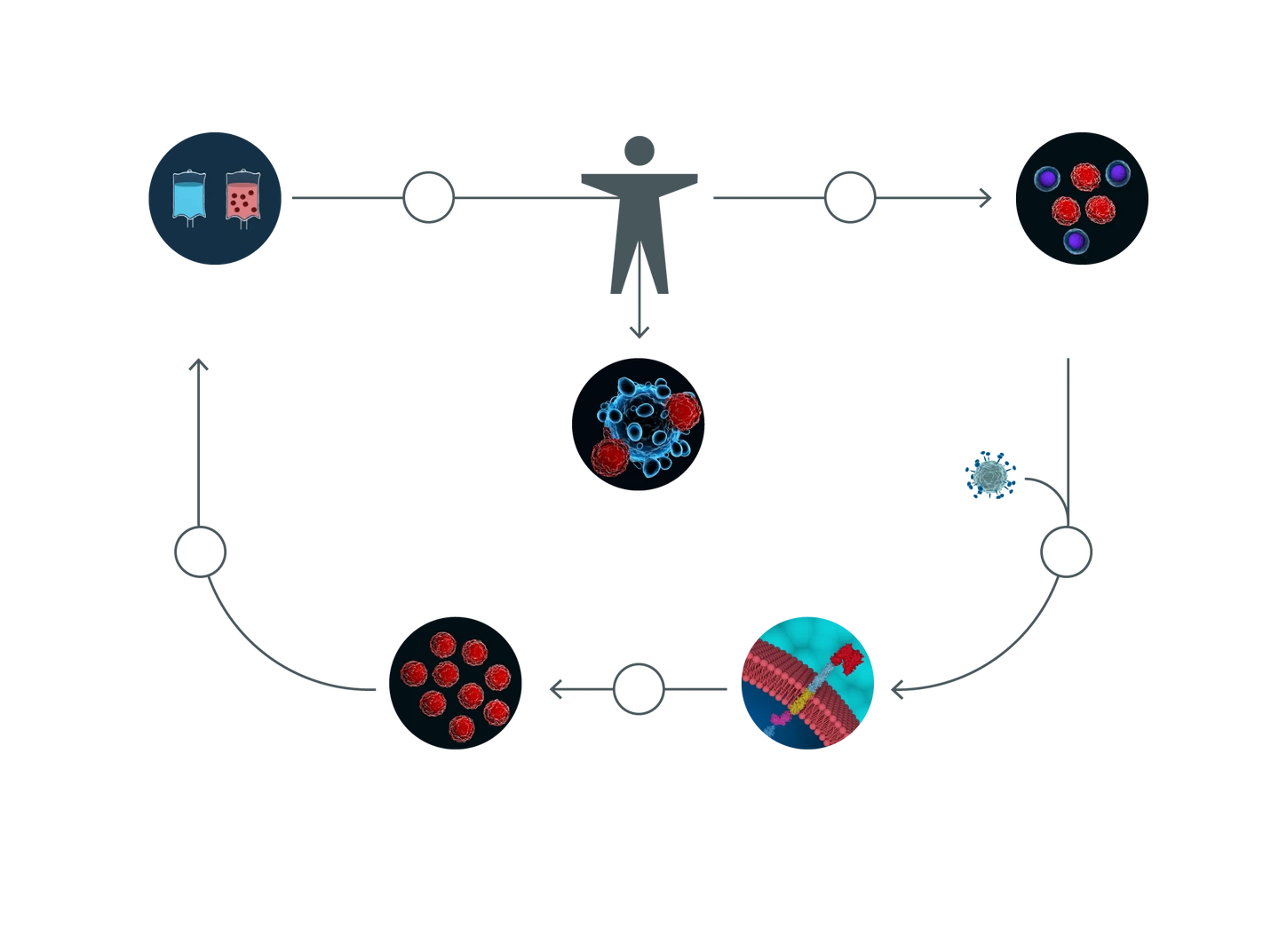
Immunotherapy has been one of the most fruitful therapeutic applications of primary cell culture. Lymphocytes, which are a subtype of white blood cells, are an important component of the immune system. Lymphocytes include T cell, B cells, and natural killer cells; all of these are derived from hematopoietic stem cells in the bone marrow, and can be easily collected from the blood for in vitro experiments.

T cells, in particular, are widely being investigated for therapeutic interventions through the development of CAR-T cell therapies. With the advent of gene editing technologies like CRISPR, manipulation of lymphocytes has become easier and more accessible. To learn more about CAR T cell therapies, check out our interviews with Dr. Avery Posey, Jr., and Imran House, Ph.D., and Junyun Lai, Ph.D., on CRISPR Cuts.

CRISPR is Advancing Primary Cell-Based Research

The ability to efficiently and precisely edit the genome has exponentially widened the possibilities of modern science. First generation gene editing took the form of designer nucleases such as zinc finger nucleases (ZFNs) and transcription-activator-like effector nucleases (TALENs), in which scientists had to engineer a separate protein for each desired locus in the genome. With the discovery of CRISPR-Cas9, this process was vastly simplified, effectively catapulting gene editing into the forefront of biological research tools.

Since its discovery in 2012, the CRISPR-Cas9 technology has been successfully harnessed to induce targeted genomic modifications across disparate cell types and species. The introduction of a homologous CRISPR guide RNA to the site of interest triggers the Cas9 nuclease to induce a double-stranded break (DSB) in the target sequence.

This break can be repaired via non-homologous end joining (NHEJ), which can introduce small insertions and deletions that disrupt the gene of interest. Alternatively, in the presence of a homologous repair template, the DSB can be repaired via homology-directed repair, whereby a sequence of interest is inserted into the genome, denoted as a CRISPR knock-in experiment. To get yourself up to speed on CRISPR, learn more in our CRISPR 101 eBook.

CRISPR 101 eBook

CRISPR has quickly become a standard laboratory tool for gene editing. As the adoption of CRISPR accelerates worldwide, up-to-date knowledge of the basics of CRISPR is essential for anyone in the field. From target identification studies to the recent breakthroughs in clinical trials, CRISPR is enabling scientists to unlock the power of the genome.

Download our CRISPR 101 eBook today to stay up to date on all your CRISPR basics and get the best results in your CRISPR experiments!

Download
CTA Image

CRISPR Editing of Primary Cells

Microinjection of CRISPR-Cas9 in Caenorhabditis elegans was first described in 2013, and was used to create knockout zebrafish and mice with efficacy rates of up to 93% soon after [3,4]. In 2014, the first reports of CRISPR-Cas9 delivery into cultured human fibroblasts were reported. Over the past few years, several different modifications to the CRISPR-Cas9 system have been reported such that gene editing in primary cells can be done with ease and precision.

Although popular, CRISPR-Cas9 editing of primary human cells has been quite challenging for researchers. Primary cells are inherently more difficult to culture than their robust immortalized cell line counterparts. They often require optimization of special nutrient medium for their growth and cannot be maintained long term in cell culture as they undergo a finite number of division cycles. As they are freshly isolated from tissue and stressed during this process, they are highly sensitive to any changes in their growth conditions. Lastly, primary immune system cells, such as T cells, have an innate mechanism to resist foreign genetic material (perceived as signs of infection). The consequent degradation of CRISPR components can result in low editing efficiencies of T cells.

The Cas9 nuclease induces double-strand breaks at guide RNA-specific loci in the genome. The cell then repairs this DSB via non-homologous end joining (NHEJ), or homology-directed repair (HDR). NHEJ creates insertions or deletions at the DSB point, while HDR uses homologous donor DNA to precisely insert or delete nucleotides at the site of interest.

Researchers have found that the cell cycle phase plays a large role in dictating which pathway the cell chooses to repair the DSB [5]. Cells in G1, S, or G2 phases tend to employ NHEJ, whereas HDR occurs in late S and G2 phases of the cell cycle after DNA replication is completed, as the sister chromatids can then serve as repair templates.

Cells have been found to specifically down-regulate HDR at M phase and early G1 phase to prevent telomere fusion [6]. Researchers have found that synchronizing the cell cycle to the S or G2 phases and introducing CRISPR components as pre-assembled Cas9 ribonucleoprotein (RNP) complexes can increase the efficiency of HDR.

RNP Complexes Improve Editing Efficacy in Primary Cells

The format and method of transfection of CRISPR components is also an important factor impacting editing efficiencies. The ribonucleoprotein (RNP) format, which involves complexing guide RNA and Cas nuclease before transfection, has been an effective gene editing format to edit human primary T Cells.

Synthetic sgRNAs Enable Researchers to Study Viral Infection in Resting Human CD4+ T Cells

Genome editing in resting CD4+ T cells is intrinsically challenging due to limited viability and poor editing efficiency. This historically limits the downstream functional assays, including pathway analyses of these primary T cells. In this case study, developed in conjunction with Lonza, we will learn how using a combination of cell culture conditions, Synthego’s Research sgRNA, and Lonza’s 4D-NucleofectorⓇ enabled Dr. Manuel Albanese and his team to achieve unprecedented knockout editing efficiencies and sustained viability in primary T cells. These studies demonstrated that high-efficiency CRISPR T cell editing can have implications for successfully developing CAR-T cell immunotherapies to treat cancer and viral infections. Dr. Albanese and Dr. Adrian Ruhle conducted this study in Dr. Oliver Keppler’s lab at the Max von Pettenkofer Institute and Gene Center in Munich, Germany.
Download
CTA Image

RNP Complexes Improve Editing Efficacy in Primary Cells

The RNP format is not only less laborious and time consuming, but it also has several other advantages over other formats. RNPs have a short half-life, so they do not remain in the cells for a long time, and are thus less toxic. Moreover, their effect is transient as they do not integrate in genome, unlike plasmids. Lastly, complexing RNA and protein ensures that the RNA is not exposed for degradation and lowers the risk of issues concerning protein folding in vivo.

CRISPR components were first microinjected in RNP format in 2013 for knocking out a gene in C. elegans, and it has become popular ever since. In 2015, researchers evaluated plasmid DNA, mRNA, and ribonucleoprotein (RNP) delivery formats in hard to transfect primary cells [7]. They noted high editing efficiencies on using RNPs, as compared to the plasmid or in vitro transcribed RNAs. Also, in 2015, a group of researchers tested different chemical modifications of guide RNAs in primary human CD4+ T cells and delivered them in RNP format disrupting the CXCR4 gene, which codes for a co-receptor for human immunodeficiency virus (HIV-1) entry into the CD4+ T cells [8]. They introduced sgRNAs that had been modified for 2’-O-thionocarbamate protected nucleoside phosphoroamidites, as well as 2’-O-methyl (M), a 2’-O-methyl 3’ phosphorothioate (MS) or had a 2’-O-methyl 3’thioPACE (MSP) group incorporated on the three terminal nucleotides at both the 5’ and 3’ ends, and achieved high-efficiency cell editing. Electroporation of RNPs successfully knocked out the CXCR4 gene in CD4+ T cells by another group of researchers in 2018 [9]. Scientists were also able to create a population of knock-in primary human T cells with approximately 20% editing efficiency using RNPs combined with exogenous single-stranded homologous DNA homology templates.

Now that the RNP format has been tested in several cell types, detailed protocols for transfecting CRISPR components in an RNP format in cells are now available [10].

Conclusion

Primary cells present a unique opportunity for researchers to understand biology in health and disease. While CRISPR-Cas9 has been around for the better part of a decade, optimizing its cutting efficiency in human primary cells has been steadily increasing compared to where it used to be. 

With continued improvements in the application of this technology to primary cells, cell therapies are quickly becoming an exciting reality. Additionally, the development of novel nucleases like hfCas12Max and eSpOT-ON (either as recombinant protein or mRNA) format further enhances the potential of CRISPR, providing greater flexibility and precision for targeting genes in primary cells. This ultimately enhances the ability of cell therapies to reach the clinic, pushing the boundaries for what is possible in treating and curing diseases.

References

  1. Kodack DP et al., Primary Patient-Derived Cancer Cells and Their Potential for Personalized Cancer Patient Care. Cell Rep. 2017 Dec 12;21(11):3298-3309. PMID: 29241554.
  2. Auburger, Georg, et al. "Primary skin fibroblasts as a model of Parkinson's disease." Molecular neurobiology 46.1 (2012): 20-27.
  3. Cho SW et al., Heritable gene knockout in Caenorhabditis elegans by direct injection of Cas9-sgRNA ribonucleoproteins. Genetics. 2013 Nov;195(3):1177-80. PMID: 23979576.
  4. Sung YH et al., Highly efficient gene knockout in mice and zebrafish with RNA-guided endonucleases. Genome Res. 2014 Jan;24(1):125-31. PMID: 24253447.
  5. Lin S et al., Enhanced homology-directed human genome engineering by controlled timing of CRISPR/Cas9 delivery. Elife. 2014 Dec 15. PMID: 25497837.
  6. Orthwein A, et al., Mitosis inhibits DNA double-strand break repair to guard against telomere fusions. Science. 2014 Apr 11;344(6180):189-93. PMID: 24652939.
  7. Liang X et al., Rapid and highly efficient mammalian cell engineering via Cas9 protein transfection. J Biotechnol. 2015 Aug 20;208:44-53. PMID: 26003884.
  8. Hendel A et al., Chemically modified guide RNAs enhance CRISPR-Cas genome editing in human primary cells. Nat Biotechnol. 2015 Sep;33(9):985-989. PMID: 26121415.
  9. Schumann K et al., Generation of knock-in primary human T cells using Cas9 ribonucleoproteins. Proc Natl Acad Sci U S A. 2015 Aug 18;112(33):10437-42. PMID: 26216948.
  10. Farboud, Behnom, et al. "Enhanced genome editing with Cas9 ribonucleoprotein in diverse cells and organisms." Journal of visualized experiments: JoVE 135 (2018).

Partner With Us

Join us in making a profound difference in the world by enabling scientists to realize their full potential.

Lets Chat